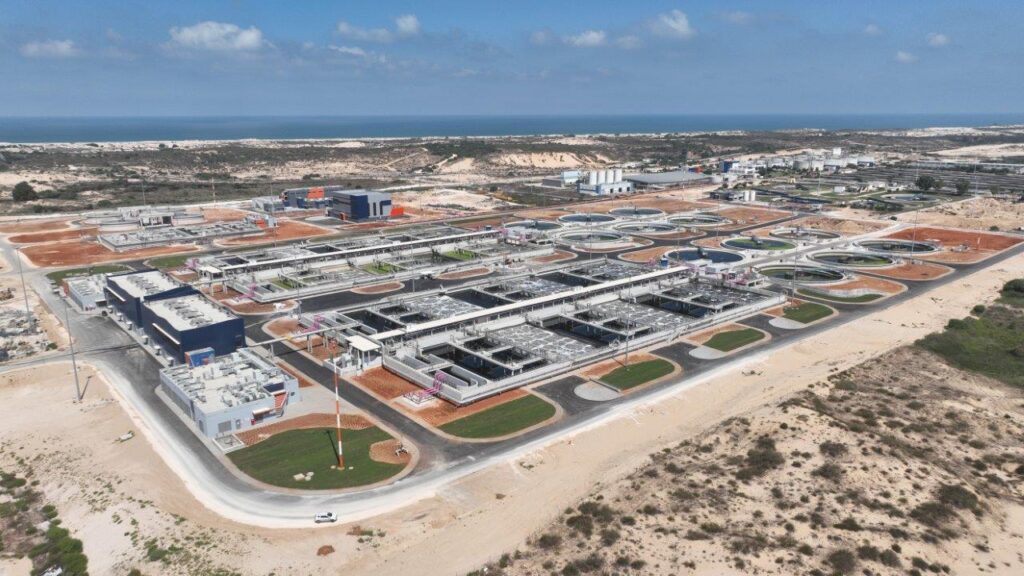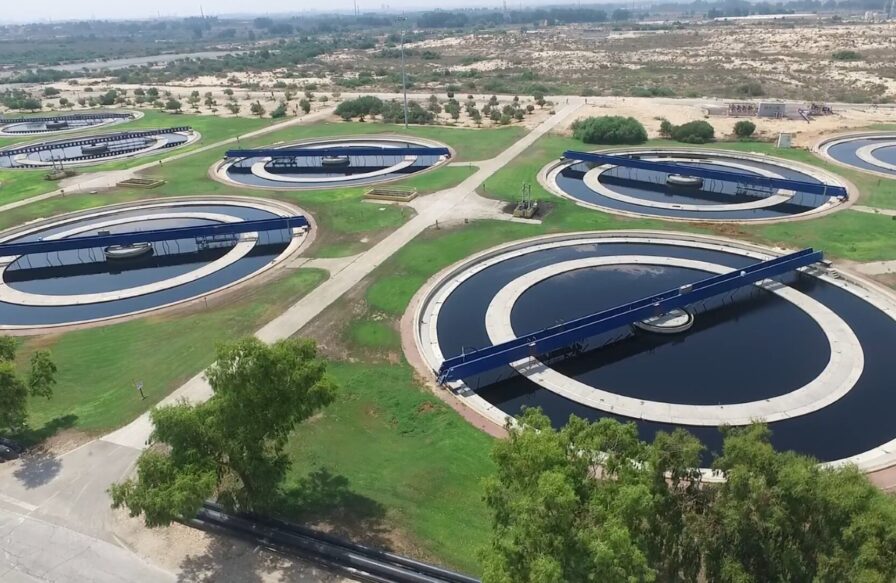
Funnel pools. Secondary sludge turns into Methane gas and ultimately into electricity
Visiting Igudan and Israel’s Water Recycling Facilities
When people think of Israel, they often imagine ancient history, vibrant cities, and incredible food — but few realize that this small country is also a global pioneer in water technology.
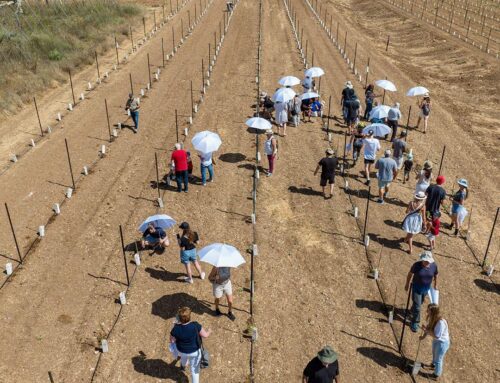
Nearly 90% of Israelis drink desalinated water every day. On my wine tours, we often visit non-irrigated vineyards and talk about how Israel turned its water scarcity into an innovation story. Guests who were picked up in Tel Aviv that morning are often surprised to learn that the water they brushed their teeth with just a few hours earlier had only recently completed its final desalination stage before flowing from the tap.
Years ago, Israel made the bold and costly decision to invest heavily in seawater desalination. But desalination is only part of the story. When it comes to recycling and reusing wastewater, Israel leads the world — treating and reclaiming more than 85% of its sewage water for agricultural use.
One of the most impressive examples is the Shafdan Wastewater Treatment and Recycling Plant, located just west of Rishon LeZion in central Israel. Serving about 2.5 million people, Shafdan is jointly owned by seven municipalities and also supports nearby towns and industrial zones. Its operation dates back to the late 1960s, and by 1987, Israel had completely stopped discharging untreated sewage into the Mediterranean Sea.
The process at Shafdan is fascinating. While wastewater spends less than 24 hours in the treatment facility, it takes almost a full year for it to complete the cycle — traveling underground to the Negev Desert, where it’s purified further through natural filtration and ultimately used to irrigate farmland and vineyards.
The Shafdan Visitor Center offers guided tours that include an engaging audiovisual presentation about the facility’s technology, environmental challenges, and Israel’s water revolution. The tour concludes with a walk through the actual plant — a rare opportunity to see firsthand how Israel turns wastewater into a national resource.
This visit can easily be included as part of a day tour exploring Israel’s innovation, sustainability, and environmental leadership — or even paired with a visit to nearby wineries that benefit from these groundbreaking water systems.