Akko (Acre) is one of Israel’s most extraordinary UNESCO World Heritage Sites—a city where history is stacked layer upon layer, and where every stone tells a different story. Beneath the vibrant streets of the Old City, lies one of the best-preserved Crusader fortresses ever discovered. Above it once stood a feared prison. And around it all, a living Mediterranean port city continues to thrive.
Few places in Israel illustrate the passage of empires quite like Akko.
A City Built on Top of Itself
At street level, Akko appears unmistakably Ottoman. Its massive walls, bustling markets, and working harbor reflect the fortified port city that famously withstood Napoleon Bonaparte’s siege in 1799, halting his eastward march and changing the course of Middle Eastern history.
But the true wonder of Akko lies beneath—and above.
The Crusader Halls – Akko’s Underground Marvel
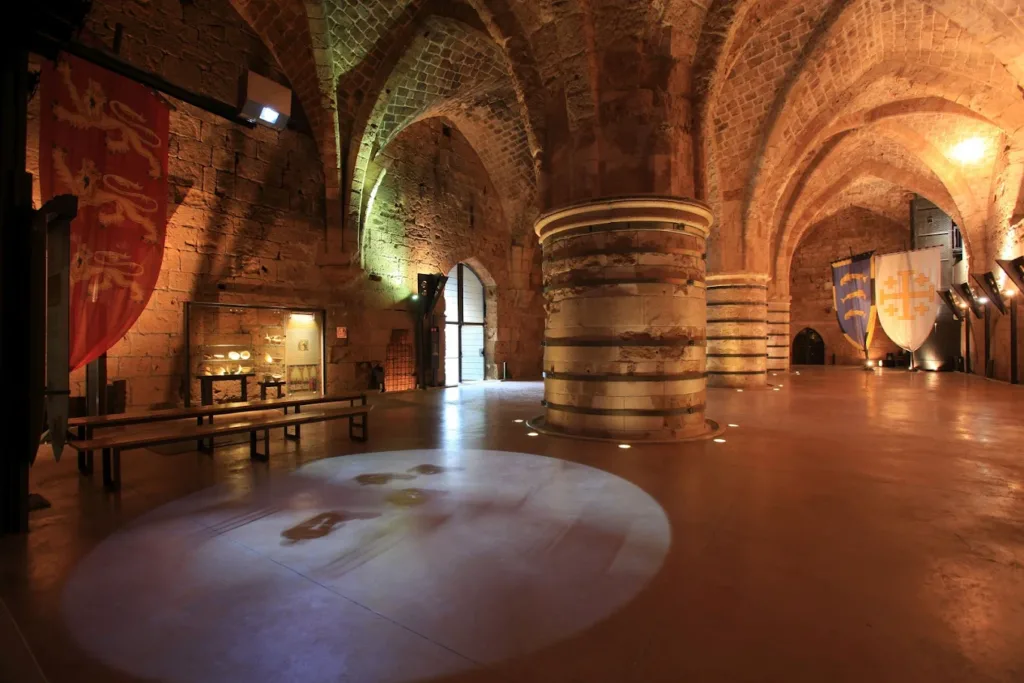
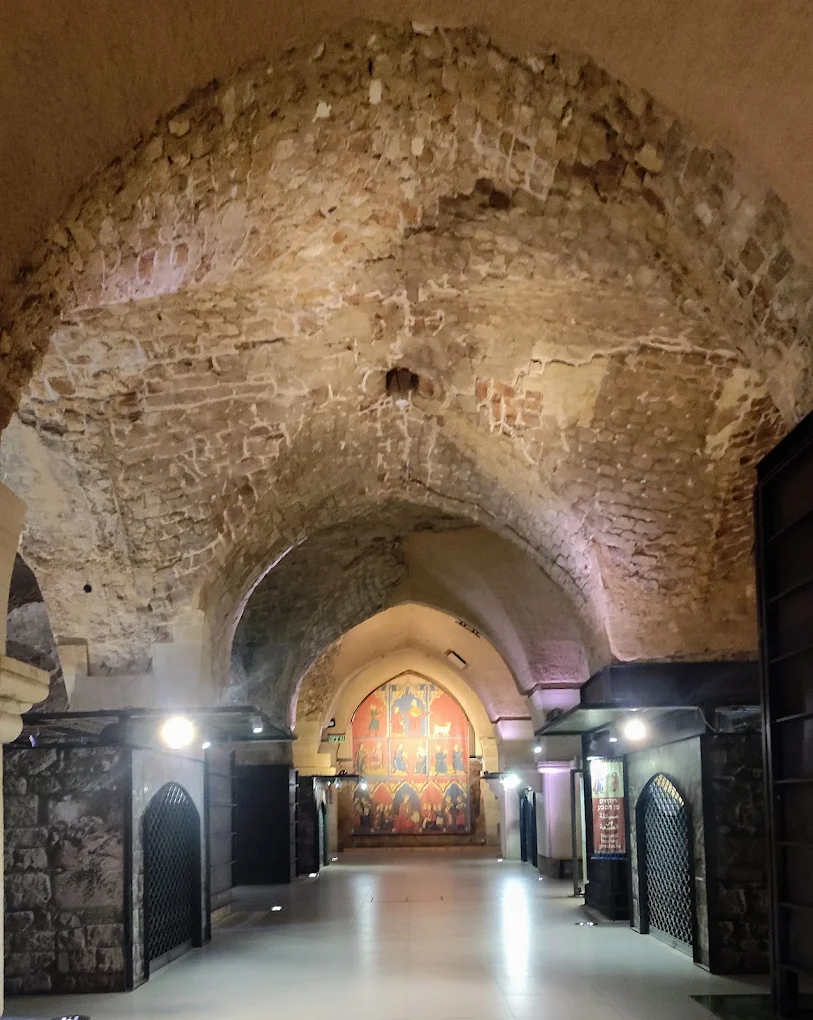
The highlight of any visit to Akko is the Underground Crusader City, built in the 12th–13th centuries by the Knights Hospitaller. Hidden for hundreds of years, these monumental halls were only rediscovered and excavated in the modern era.
The visit begins in the Dungeon, where knights who violated the strict rules of the order were imprisoned. From there, visitors walk through:
-
Crusader-era streets buried beneath later construction
-
A vast refectory (dining hall) with soaring vaulted ceilings
-
The impressive Grand Hall, built on a monumental scale that reflects the power and wealth of the Crusader Kingdom
A Fortress of Stone and Silence
Located on the northwestern side of the Old City, the halls form part of the Crusader fortress complex. Built from massive stone blocks with thick pillars and high vaults, the halls remained naturally cool—an architectural response to Akko’s humid coastal climate.
This complex served as the operational heart of the Knights Hospitaller:
-
A dining hall
-
Administrative center
-
Military and hospital compound
Although excavations began during the British Mandate, the Crusader Halls as we experience them today have only been open to the public for about 20 years, making them one of Israel’s most remarkable archaeological revelations.
From Knights to Prisoners: A Stark Historical Irony
One of Akko’s most powerful historical twists is that directly above the Crusader halls stood an Ottoman prison, later used by the British.
In the 1870s, this prison held Bahá’u’lláh, the founder of the Baháʼí Faith, who was exiled and imprisoned here by the Ottoman authorities. From this place of confinement emerged teachings that would spread worldwide, making Akko a sacred destination for Baháʼís today.
Decades later, during the British Mandate period, the same prison held Ze’ev Jabotinsky, the Zionist leader, intellectual, and founder of Revisionist Zionism.
Few places in the world so vividly demonstrate how a medieval Crusader fortress became an Ottoman prison, then a British jail—each era imprisoning those it feared most.
From Stone Walls to Spices and Sea Air
After resurfacing from the underground halls, our tour continues through Akko’s Ottoman open market, a sensory celebration of spice stalls, bakeries, and some of Israel’s most famous hummus restaurants.
The All-Access Akko Experience
The combined Akko ticket includes entry to the Hammam, An ancient Turkish bathhouse, where a compelling audiovisual presentation tells the story of Ahmad al-Jazzar, Akko’s powerful Ottoman ruler.
We then continue to the historic port area, visiting Khan al-Umdan, the beautifully restored caravanserai overlooking the sea. Nearby stands Akko’s iconic Clock Tower, once a guesthouse and now being converted into a boutique hotel—where history meets renewal.
But wait—Akko also carries a deeply meaningful Jewish story, often overlooked by visitors rushing between Crusader halls and Ottoman markets.
One highlight is the Tunisian Synagogue (Or Torah Synagogue), one of the most visually striking synagogues in Israel. Its interior is covered with over 150 colorful mosaics, each depicting biblical scenes, Jewish holidays, symbols, and verses. The synagogue is a living work of art and a testament to the North African Jewish heritage that became part of Akko’s modern identity.
Another important stop is the Rabbi Moshe Chaim Luzzatto (Ramchal) Synagogue, dedicated to one of the most remarkable Jewish thinkers of the 18th century. Luzzatto—philosopher, kabbalist, poet, and author of Mesillat Yesharim—spent most of his life in Italy, but in his final years he was active in Akko, where he taught and wrote until his death.
His presence here reminds us that Akko was not only a city of empires and armies, but also a place of spiritual creativity and Jewish intellectual life.